
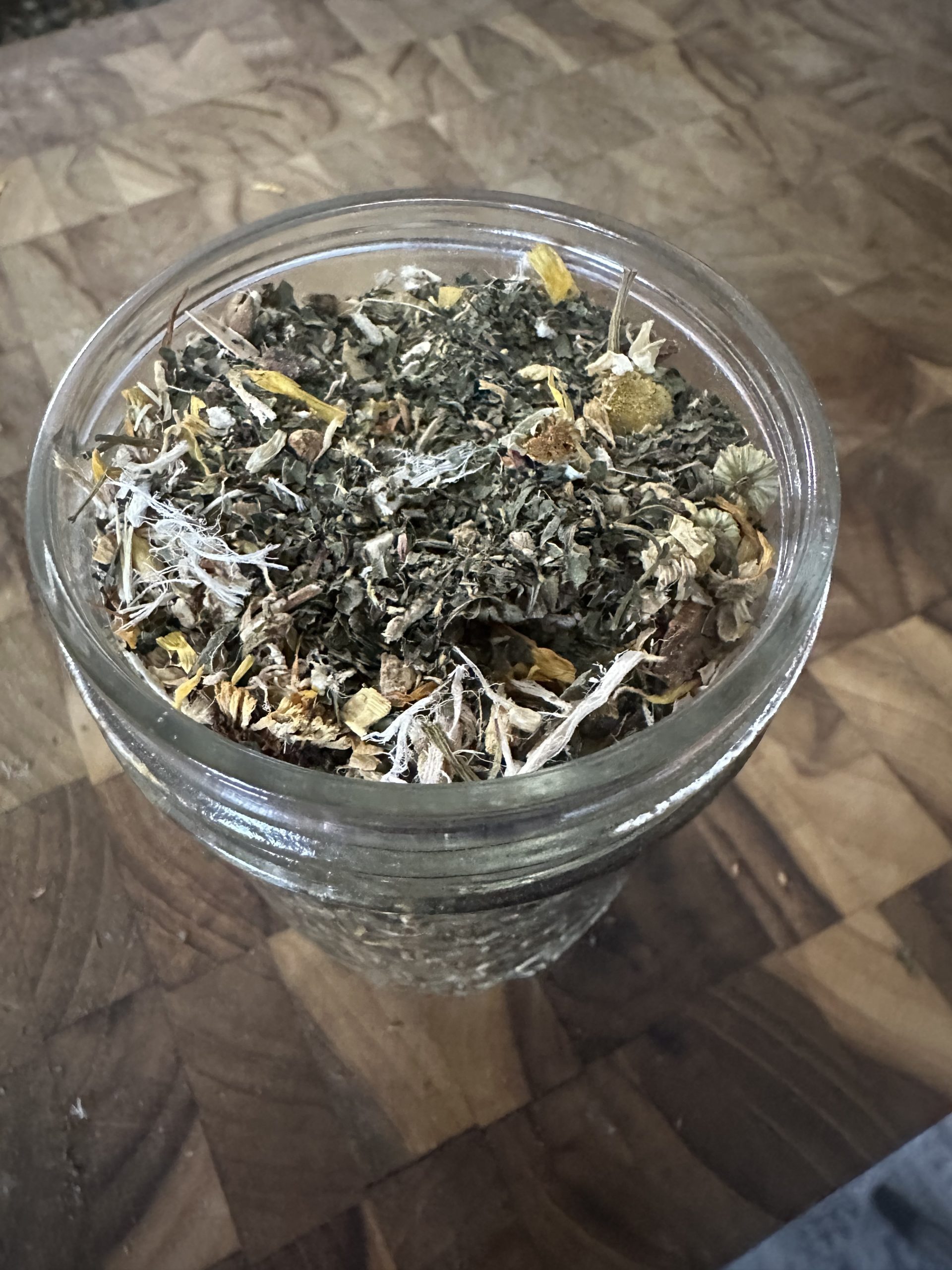
Making your own tisane/tea blends is not difficult
My son has been ill with a disease that affects the gut. So, I decided as one mode of healing to blend a Gut Healthy Herbal Tisane for him to drink. We all seem to enjoy hot tea or cold tea and this one is tasty.
I enjoy making herbal tisanes. We love tea (tisane is just an herbal “tea” without actual tea leaves in it). I either grow my own herbs and ingredients, or purchase them from places like Azure Standard or Mountain Rose Herbs. I use all organic or if foraged, from a place that does not spray toxins nearby.
When you are blending herbs for an herbal tisane, you usually start with the most amount of the base item. Things like chamomile, mint, lemon balm, nettle, raspberry leaf, etc. Then you build on that base with the Supporting ingredients which are things like licorice root, dandelion, elderflower, hibiscus, slippery elm, etc. Then you add a bit of an accent item for flavor such as cinnamon, citrus peel, vanilla bean, ginger, cardamom, rose petals, rose hips, etc.
You can do a blend soley for flavors or for the medicinal properties. I could add some dried ginger to this current blend i made, but i figured we would try this without. Ginger is great for nausea, but that has not really been the symptom we are trying to heal. We are trying to heal the colon and small intestine inflammation and damage, sooth the gut lining and rebuild it.
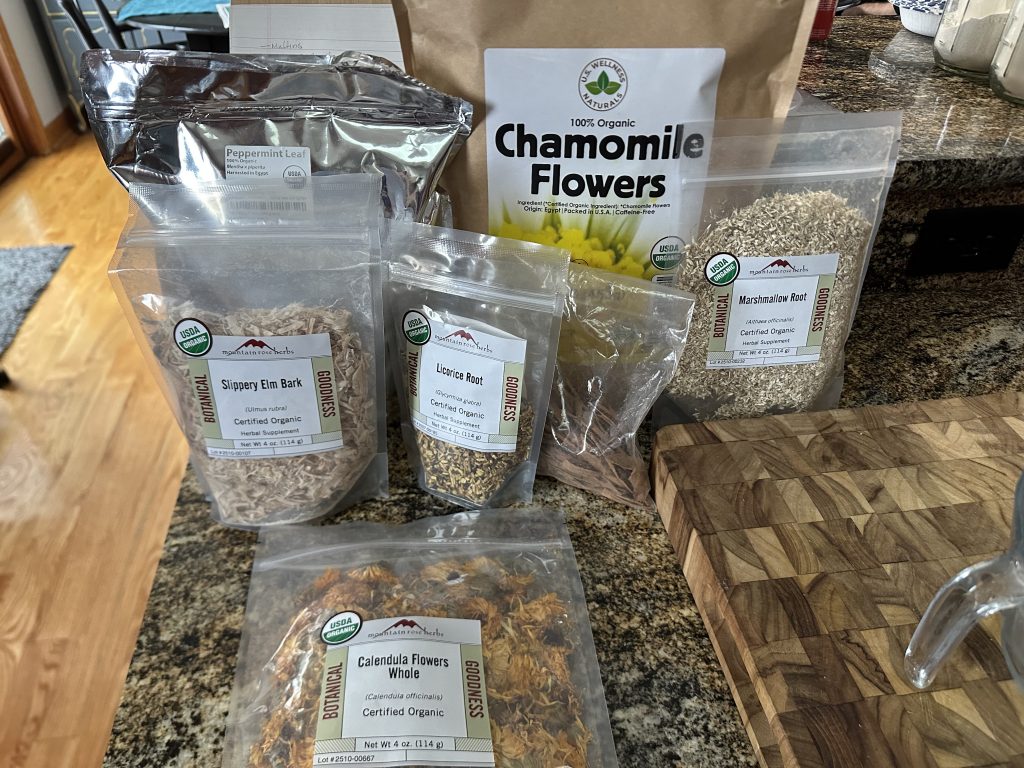
The blend in my tisane
I did two attempts, both were delicious.
Version 1- I liked this blend and so did most of the family, especially with raw honey added. The child I made it for, said it was too minty and would not drink it (and by child, I mean he is my child, but is a young adult…picky and stubborn, but I love him).
½ cup peppermint (Mentha x piperita) leaf
1/8 cup chamomile (Matricaria chamomilla)
2 Tablespoons Slippery Elm (Ulmas rubra)
1 Tablespoon Licorice Root (Glycyrrhiza glabra)
1 Tablespoon Marshmallow Root (Althaea officinalis)
1 Tablespoon Calendula Flowers (Calendula officinalis)
Ceylon Cinnamon (Cinnamomum verum)- a few pieces of bark broken up.
Version 2- I simply used ¼ cup of chamomile and 1/8 cup peppermint, everything else was the same. He had one taste of this tea (cold and without honey) and said it was ok. So hopefully, he will drink this as a way to help his gut heal.
Primer on the ingredients I used for this tisane.
I did this mostly for medicinal purposes, however, the amounts I used were based on my knowledge of the herbs and what flavor profile it thought it would have.
Peppermint (Mentha x piperita) aids in digestion, as well as can help with headaches. It can also reduce irritable bowel symptoms and can help nausea and respiratory issues. It contains menthol, menthone and limonene essential oils. Animal studies have shown that peppermint relaxes your digestive system and may ease pain. It also prevents smooth muscles from contracting, which could relieve spasms in the gut. There are numerous studies with people with IBS using peppermint with great success. It’s muscle relaxant properties can help relieve headaches, as well as the cooling sensation of menthol which increases blood flow. Peppermint has antiviral and antibacterial properties as well as anti-inflammatory properties. It can help relieve clogged sinuses (topically using essential oil is what the studies show and breathing the steam from tea). Peppermint may improve energy levels and reduce fatigue.
Chamomile (Matricaria chamomile) helps improve sleep and reduce anxiety. It also is used for supporting digestive health, lowering blood sugar levels, for heart health, and mild skin irritations. It is high in antioxidants including terpenoids group of antioxidants such as chamazulene and acetylene. It contains flavonoids apigenin, quercetin, patuletin ,as well as several glucosides. These compounds help reduce inflammation by fighting free radical damage and preventing cell mutation. It increases immune function, lowers rates of mood disorders, and reduces pain and swelling. It promotes liver detoxification. It is a digestive relaxant; it also contains anodyne compounds that are anti-spasmodic. It can also reduce pain. Chamomile has so many great health benefits, even more than listed here. Chamomile does have some counterindications such as it is related to ragweed, so if you have seasonal allergies to ragweed or it’s relatives, use caution.
Slippery Elm (Ulmas rubra) soothes sore throats, improves digestive issues like irritable bowel symptoms, reduces inflammation, eliminates infections, reduces blood pressure, helps with detox pathways. It has mucilage, a substance that becomes a sticky gel when mixed with water. Mucilage coats and soothes the mouth, throat, stomach and intestines. It may protect against ulcers and excess acidity in the GI tract, because it causes reflux stimulation of nerve endings which leads to increased mucus secretion. It is also high in antioxidants which can help relieve inflammatory bowel conditions. Slippery elm contains compounds called phenolics which are antioxidants, which help scavenge free radicals and reduce oxidative stress by eliciting cellular responses that counter the oxidative stress. Slippery Elms mucilage, antioxidant and antimicrobial properties make it a great remedy for wounds, burns, boils and other skin conditions. Because slippery elm coats the digestive tract, it is advised to take it (tea or other form) 2 hours before or after any other medication to avoid interfering with absorption.
Calendula (Calendula Officinalis) promotes wound healing, reduces inflammation, improves skin health and more. It has anti-inflammatory properties and is an antioxidant. That is why it is often used in lotions and creams to help skin conditions such as rashes and eczema. It is a strong antiviral herb. It contains both lutein and beta-carotene which the body absorbs and converts to vitamin A. It has fatty acids; the two dominant ones are calendic and linoleic acids. It has powerful flavonoids (antioxidants) which give it the anti-inflammatory properties. Calendula has been shown to prevent and relax muscle spasms. Topically, studies show it can increase the healing of wounds and ulcers. It improves skin firmness and hydration. It helps increase blood flow and oxygen to wounds and infected areas. Taken as a tea it can help with internal duodenal and gastric ulcer symptoms.
Marshmallow Root (Althaea officinalis) protects mucous membranes, supports digestive health, soothes sore throat. It is anti-inflammatory and aids in healing and reducing irritation, it breaks up mucous, kills bacteria. It is frequently used as a cough remedy due to its antitussive properties and mucilage abilities. Marshmallow root helps restore the integrity of the gut lining by forming a protective layer around small junctions. The raw polysaccharide components showed in studies to stimulate cell vitality without triggering excessive proliferation and was actively internalized into the epithelial cells. It has shown to upregulate cell pathways that are critical to cell regeneration. The mucilage properties show it coats the digestive tract and can help with discomfort and provide anti-inflammatory effects. Studies have shown that the mucilage properties of marshmallow root remain stable throughout the body all the way through the digestive system till they reach the colon. They don’t change form while passing through the digestive tract and are therefore useful in soothing symptoms of inflammatory bowel disorders. Marshmallow root has anti-irritant properties that make it a good choice for skin issues as it soothes the nerve system of the skin. It does have some diuretic effects. Marshmallow root has shown to facilitate a process called phagocytosis, which removes dead or damaged cells from the body.
Licorice Root (glycyrrhiza glabra) is sweet. It is an adaptogenic herb. Licorice root is frequently used as a “guide herb” because it works in tandem with other herbs to enhance their effect and guide them to where they are most beneficial. It is anti-inflammatory. Science has isolated 134 compounds in licorice root: Flavonoids, coumarins, triterpenoids, and stilbenoids. Flavonoids are rich in antioxidants and are anti-inflammatory, as well as having other benefits. Courmarins and stilbenoids are polyphenols that are often anti-inflammatory and antibiotic. Triterpenoids are typically stronger and include steroidal substances.
One of the flavonoids in Licorice root is glabradin, it is anti-inflammatory, has a positive effect on metabolism and function as a phytoestrogen. The triterpenoid glycyrrhizin is what gives the plant the sweet flavor. It is a potent anti-inflammatory and a mild natural laxative and expectorant, among other benefits. It can create side effects when overused, so watch your intake if using a non-decglycyrrhized licorice. The amount of licorice root (extract) recommended in a day is 6-18 grams, but a normal supplement with licorice root has less than 1 gram per serving.
There have been studies where licorice root helped with nausea, indigestion, heartburn and stomach pain. Licorice root is a demulcent (soothing) herb and can work as a natural remedy for ulcers and beneficial for gut health and leaky gut.
Licorice root was found in studies to help regulate cortisol which can help with adrenal fatigue. It is one of the main adaptogenic herbs to help with stress. The triterpenoid content in licorice root has been shown to be antiviral and an immunostimulant.
Due to the expectorant and demulcent properties, it is good for a sore throat and cough. It is also an antispasmodic can help with muscle cramps both internally and topically. It is great for skin issues, as it acts as a hydrocortisone.
The phytoestrogen in it can help females with PMS. Therefore, it should be avoided in pregnancy.
Ceylon Cinnamon (Cinnamomum verum) has a distinctive flavor, with high level of flavonoids. It has a lower level of coumarin than cassia cinnamon. It is rich in antioxidants like polyphenols which help reduce inflammation and protect from free radical damage. Ceylon Cinnamon has been shown to improve blood lipid profiles and helps manage blood sugar levels. It slows down the breakdown of carbohydrates in the digestive tract. The compound Cinnamtannin B1 can lower glucose absorption after meals and increase insulin sensitivity.
The antioxidants, particularly cinnamaldehyde, have been shown to have strong anti-inflammatory effects and studies have shown that it can decrease markers of inflammation in the body. Cinnamaldehyde has shown in preliminary studies to help stop cancer tumor growth in mice.
Ceylon cinnamon has shown that it can relax blood vessels leading to lower blood pressure. Ceylon cinnamon has antibacterial and antifungal effects, and it may have antiviral properties (it has preliminarily shown to inhibit the replication of certain viruses). There have been studies done stating that it was effective against E. Coli and Candida Albicans. There are some neuroprotective properties of Ceylon cinnamon, it is believed to inhibit the buildup of tau proteins in the brain.
Ceylon cinnamon has long been used for digestive health. Its soothing for those with sensitive digestive systems and the antimicrobial properties can help the maintain a healthy gut microbiome.
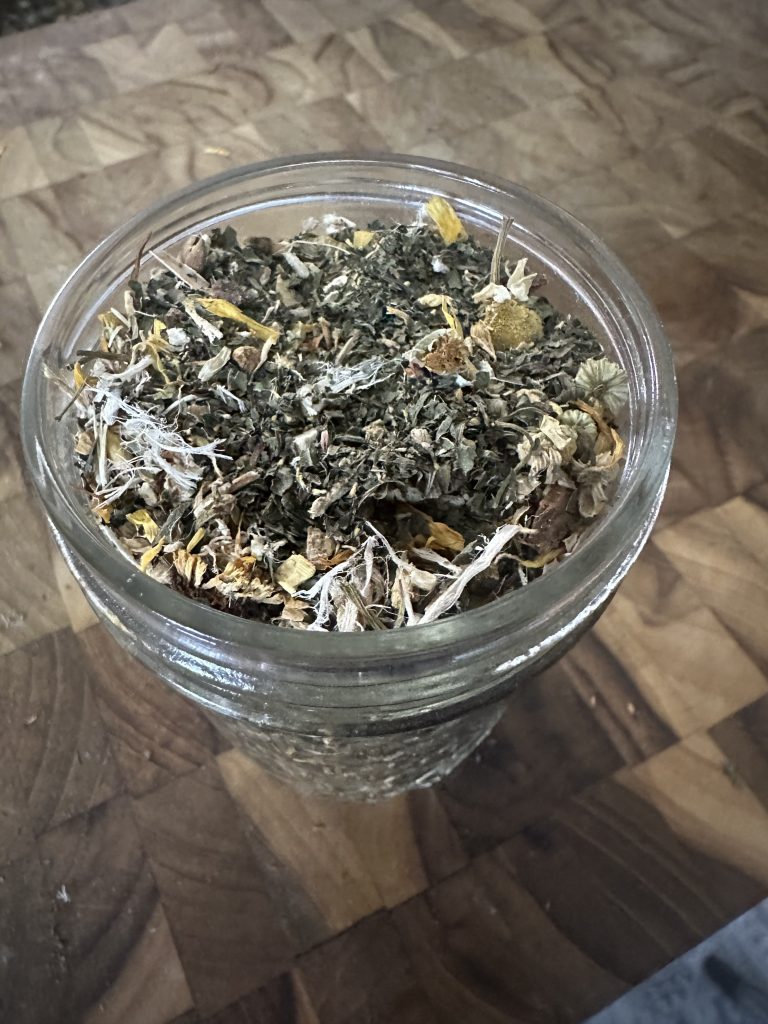
Drinking this tisane
When I make this I use about a teaspoons of tea for a large mug. I do not boil the water for herbal “teas”, but do about 160 degrees. I let it steep about 5 minutes. It is also good cold over ice. The main flavor profile is the mint, but the chamomile comes though. I find it to be a very calming and soothing tisane to drink. I told my son to drink one to two mugs a day. I don’t want to over do it as licorice root, marshmallow root and slippery elm should not be overused.


